Painful Sex After Menopause, Even With Lube: What Else Helps
If lube isn’t enough, the cause is often GSM, tense pelvic muscles or another condition. What helps next, from moisturizers to vaginal estrogen, DHEA and PT.
If sex still hurts after menopause even with plenty of lube, friction probably isn’t the whole story. The common culprits are genitourinary syndrome of menopause (GSM), where the vaginal tissue itself has become thin, dry and less stretchy; pelvic floor muscles that tense up in anticipation of pain; or a separate condition such as a skin disorder or infection. All of these are treatable. The next steps are a vaginal moisturizer used on a schedule, prescription options such as low-dose vaginal estrogen, vaginal DHEA (prasterone) or ospemifene, and hands-on help from a pelvic floor physical therapist, sometimes with dilators.
Why lube isn’t always enough after menopause
Lube reduces friction in the moment. It doesn’t change the tissue underneath, and after menopause that tissue is often the problem. The Menopause Society explains that losing estrogen can leave the vaginal tissues thin and dry, with less elasticity and lubrication. The result can be pain during sex or even routine pelvic exams, and discomfort when you wipe after peeing or wear certain clothes. Burning, itching and urinary symptoms such as urgency or more frequent urinary tract infections can be part of the same picture.
You’re far from alone. The Menopause Society’s 2020 position statement estimates that GSM affects roughly 27% to 84% of postmenopausal women, and calls it likely underdiagnosed and undertreated. Two more facts are worth knowing:
- It tends to get worse, not better, without treatment. Unlike hot flashes, which usually ease with time, GSM usually worsens if it’s left alone.
- It can be more severe in some situations: after surgical removal of both ovaries, after chemotherapy, and for people taking aromatase inhibitors for breast cancer.
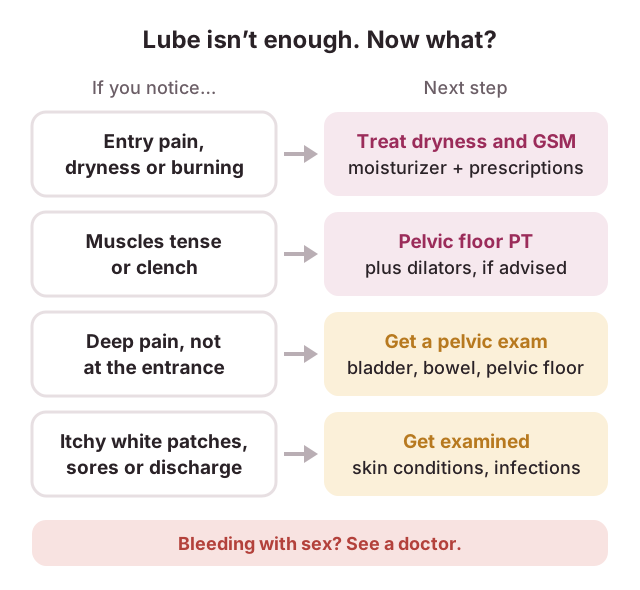
Where it hurts is a useful clue. Cleveland Clinic separates entry pain, felt at the vaginal opening as penetration starts and linked to hormone changes, dryness, irritation, infection or injury, from deep pain, felt with deeper penetration and linked to bladder or bowel conditions, pelvic floor problems, endometriosis or pelvic congestion.
What to try next, from the pharmacy shelf to prescription
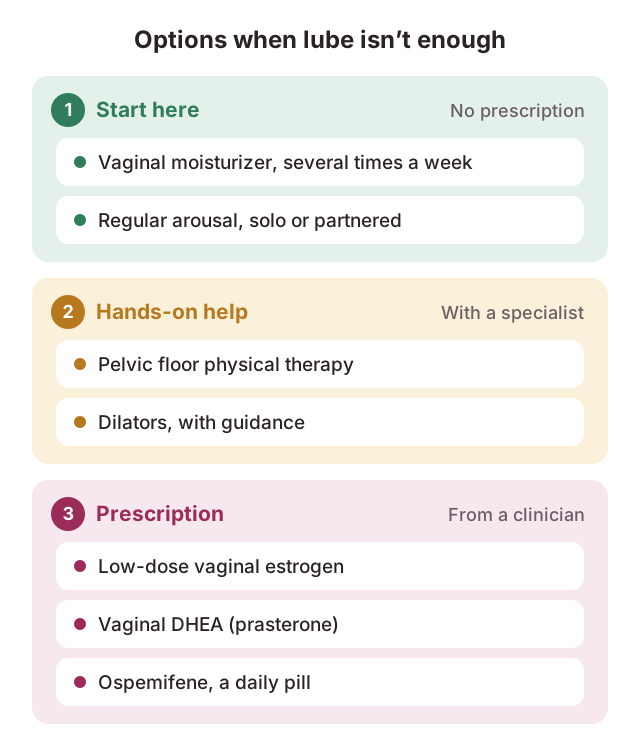
The Menopause Society’s position statement puts it simply: nonhormone products sold without a prescription give enough relief for most women with mild symptoms, while low-dose vaginal estrogen, vaginal DHEA, systemic estrogen and ospemifene are effective for moderate to severe GSM. These steps aren’t either-or. The Menopause Society notes that lubricants and moisturizers can be used alongside prescription treatment.
Add a moisturizer on a schedule
If you’ve only been using lube, this is the easiest upgrade. Moisturizers are used regularly, often several times a week, to keep tissue moist between sessions, not just during them. Our moisturizer vs lube guide explains the difference, and Replens vs Revaree compares two common formats.
Low-dose vaginal estrogen
The Menopause Society calls low-dose vaginal estrogen effective and safe, and says it relieves vulvar and vaginal discomfort, irritation, dryness and pain with sex. It comes as a cream, a vaginal tablet or softgel insert, or a small, flexible ring that’s replaced every three months. Expect gradual change: improvement usually shows up within a few weeks or months of consistent use. If vaginal symptoms are your only menopause complaint, low-dose vaginal treatment is recommended over whole-body hormone therapy.
A few details people often wonder about. According to the 2020 position statement, you don’t need a progestogen with low-dose vaginal estrogen, though endometrial safety hasn’t been studied in trials longer than a year. And The Menopause Society says compounded vaginal estrogen and testosterone aren’t government-regulated and aren’t recommended for GSM in most cases.
Prasterone (vaginal DHEA)
Prasterone, sold as Intrarosa, is a hormone-containing insert (dehydroepiandrosterone, or DHEA) that you place in the vagina nightly. The Menopause Society lists it as a prescription option that reduces vaginal dryness and pain with sex.
Ospemifene
If you’d rather not put anything in your vagina, ask about ospemifene (Osphena). It’s a daily oral tablet, a type of drug called a selective estrogen receptor modulator, and Cleveland Clinic notes that the FDA approved it for painful sex due to menopause.
Whole-body hormone therapy, if you also have hot flashes
Systemic estrogen taken for hot flashes also treats vaginal dryness, although some people still benefit from adding a low-dose vaginal treatment.
If you’ve had breast cancer
The 2020 position statement says there isn’t enough data yet to confirm the safety of vaginal estrogen, DHEA or ospemifene after breast cancer, and that care should weigh your own needs and your oncologist’s recommendations. The Menopause Society’s patient guidance adds that low-dose vaginal estrogen or DHEA may still be options, decided together with your primary care clinician and oncologist. Don’t rule them in or out on your own; ask.
What about vaginal laser?
The Menopause Society says laser and radiofrequency devices are cleared for vaginal use but not specifically for GSM, that the evidence doesn’t support them for dryness or pain with sex, and that they’re considered experimental outside clinical trials.
When the problem is muscle: pelvic floor PT and dilators
Pain teaches the body to brace. Cleveland Clinic describes vaginismus as involuntary spasms of the vaginal muscles, often caused by fear of being hurt or by past trauma, and lists pelvic floor dysfunction as a common cause of painful penetration. If that sounds familiar, Cleveland Clinic says physical therapy may be the first treatment your provider suggests.
A pelvic floor physical therapist does more than teach Kegels. The Menopause Society notes that pelvic floor exercises can strengthen weak muscles and relax tight ones, and those call for different work. If you’ve been doing Kegels for bladder leaks, mention it; our guide to pelvic floor exercises over 50 covers the strengthening side.
Dilators are smooth, tube-shaped devices, made of plastic or medical-grade silicone, that gently stretch the vaginal tissue. The Menopause Society says they can help when the vagina has become shorter and narrower or when involuntary tightening gets in the way, ideally with guidance from a sexual medicine specialist, physical therapist or sex therapist. Cleveland Clinic’s practical outline:
- Start with a size that feels snug but not painful, and move up gradually.
- Use a water-based lubricant, not an oil-based one.
- Keep the dilator in for about 10 to 15 minutes at a time.
- Follow your provider’s schedule. Some people use dilators daily, others every other day, for weeks to months.
- Book regular follow-ups with your provider or pelvic floor physical therapist while you’re using them.
Other causes worth checking
Not every postmenopausal pain is GSM. The Menopause Society points out that yeast infections, allergic reactions and certain skin conditions can cause similar vulvar and vaginal symptoms. Ask to be checked for:
- Lichen sclerosus. The NHS describes itchy white patches, most commonly on the genitals, and says it’s much more common in women over 50. Sex can hurt because the vulva may shrink or tighten. A strong prescription steroid ointment usually helps, so it’s worth getting a diagnosis.
- Infections, such as yeast, bacterial vaginosis or sexually transmitted infections like herpes.
- Vulvodynia, a condition that causes chronic pain in the vulvar area.
- Bladder and bowel conditions, including recurrent urinary tract infections, interstitial cystitis and irritable bowel syndrome.
- A reaction to a product. If the pain feels like stinging right after you apply something, see our guide to why lube burns.
- Emotional factors, such as fear of pain, past trauma or a mental health condition, which Cleveland Clinic also lists as possible contributors.
What helps in the meantime
While you wait for an appointment, a few things can make sex less painful, or make room for intimacy without penetration:
- Change the menu. The Menopause Society suggests outercourse, such as extended caressing, mutual masturbation and massage, as a way to stay sexually close in place of intercourse.
- Keep arousal in your life. Regular sexual stimulation, with a partner, alone or with a vibrator, promotes blood flow and natural secretions.
- Try positions that put you in control of depth and pace, and take time to relax first. Cleveland Clinic suggests both.
- Use a water- or silicone-based lube generously and skip scented products: vaginal perfumes, bubble baths, scented pads and wipes. Our lube guide explains the types.
- Talk about it. Our guide to talking with your partner has openers that work just as well for this conversation, and sex and menopause covers the bigger picture. If pain has opened a gap in how often you each want sex, see mismatched libido.
When to see a clinician, and what to say
Cleveland Clinic advises seeing a provider for new or worsening pain during sex, bleeding with sex, genital sores or lesions, or unusual discharge. The NHS adds any itchy white patch on your genitals.
A gynecologist or your primary care clinician is the right first stop, and you can ask for a referral to a pelvic floor physical therapist. Go in with specifics: where it hurts (at the opening or deep inside), when (on entry, during, afterward), what you’ve tried and for how long, and whether you’ve had breast cancer or other hormone-sensitive conditions. That turns a vague “sex is uncomfortable” into a plan.
Frequently asked questions
Why is sex still painful after menopause, even with lubricant?
Lube reduces friction, but it doesn’t change the tissue. After menopause, falling estrogen can leave the vaginal lining thin, dry and less elastic (genitourinary syndrome of menopause), and pelvic floor muscles can start bracing against pain. That’s why the next steps target the tissue and the muscles, not just the friction.
What can I do about painful sex after menopause?
Add a vaginal moisturizer on a schedule, keep using lube, and see a clinician about prescription options such as low-dose vaginal estrogen, vaginal DHEA (prasterone) or ospemifene. If your muscles tense up, ask about pelvic floor physical therapy and dilators. Get any new or unusual symptoms checked, since other conditions can cause similar pain.
What is genitourinary syndrome of menopause?
GSM is the medical name for the vaginal, vulvar and urinary changes caused by the loss of estrogen at menopause. It can cause dryness, burning, itching, pain with sex and urinary symptoms. It’s estimated to affect roughly 27% to 84% of postmenopausal women.
Is dyspareunia after menopause permanent?
It doesn’t have to be. The Menopause Society says that in most cases GSM symptoms can be managed effectively. GSM usually worsens when it’s left alone, though, so there’s no upside to waiting.
Can I use vaginal estrogen if I’ve had breast cancer?
Possibly, but it’s an individual decision. The Menopause Society says low-dose vaginal estrogen or DHEA may be options after breast or uterine cancer, through shared decision-making with your primary care clinician and oncologist, while noting that safety data in this group are still limited.
Sources
- The Menopause Society: MenoNote – Genitourinary syndrome of menopause
- The North American Menopause Society (now The Menopause Society): The 2020 genitourinary syndrome of menopause position statement
- Cleveland Clinic: Dyspareunia (painful intercourse)
- Cleveland Clinic: Vaginal dilators
- NHS: Lichen sclerosus
Spotted an error or something out of date? Email [email protected] and we’ll take a look.
More guides

Guide · Toy Safety & Care
Body-Safe Toy Materials: What to Choose and What to Avoid
Not every material is equally safe. Learn which materials are non-porous and easy to clean, and which ones to avoid.
Updated

Guide · Toy Safety & Care
How to Buy Sex Toys Discreetly: Packaging, Billing and Delivery
What discreet shipping really looks like, what shows up on your bank statement, and how to keep emails, deliveries and gifts private in a shared home.
Updated