Why Does Lube Burn or Sting? Common Causes and What to Do
Lube that burns, stings or itches usually comes down to a concentrated formula, warming agents, fragrance or preservatives. What to do now and what to buy next.
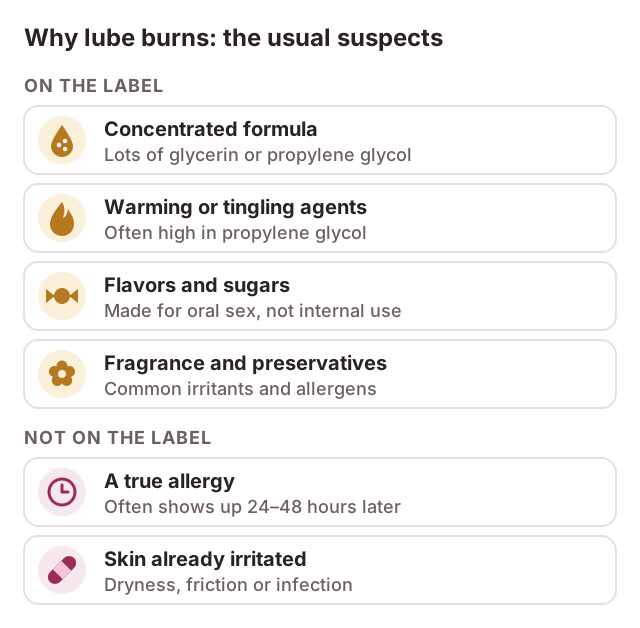
When lube burns, the formula is often the problem, not you. The common culprits are a very concentrated water-based lube (lots of glycerin or propylene glycol), warming or tingling agents, flavors and sweeteners, and fragrance or preservatives. Less often it’s a true allergy, or the lube is landing on skin that was already dry, irritated or infected. If it’s burning right now, stop and rinse the area with plenty of plain, lukewarm water.
Why does lube burn? The usual culprits
A very concentrated formula
If a plain, unscented water-based lube stings, this is the first thing we’d suspect. Many water-based lubes are far more concentrated than the body’s own fluids, a property called osmolality. The WHO advisory note on lubricants puts vaginal fluid at 260 to 290 mOsm/kg and says most commercial lubes measured 2,000 to 6,000 at the time. Glycols such as glycerin and propylene glycol are the main reason, and the WHO notes that high-osmolality lubes might damage the lining of the vagina and anus. Our lube ingredients guide explains how to spot them.
Warming or tingling agents
These are designed to make you feel something, and on sensitive tissue “warm” can tip into “burning” quickly. The WHO notes that warming lubes often contain high levels of propylene glycol, which brings you back to the concentration problem. A 2025 review in Canadian Family Physician advises people prone to irritation to skip warming and stimulating products.
Flavors and sweeteners
Flavored lube is made for oral sex. The same review lists flavors made with sugars such as glucose and sucrose among the ingredients to avoid if you’re prone to irritation or infections, so keep the piña colada bottle away from anything internal.
Fragrance and preservatives
MedlinePlus lists fragrances and preservatives among the common causes of allergic skin reactions. Water-based lubes need a preservative, and the WHO notes these can cause irritation and sensitization in some people. Parabens (methylparaben, propylparaben) are the most common, but “paraben-free” just means a different preservative, such as potassium sorbate or phenoxyethanol.
A true allergy, or the condom
MedlinePlus separates two kinds of skin reaction. Irritant reactions are the most common, aren’t an allergy, and can come from irritating substances or friction; a strong irritant can cause a reaction after brief contact, while a milder one may take repeated use. Allergic reactions don’t happen the first time you’re exposed, and they usually appear 24 to 48 hours after contact.
So a lube that stings the first time you use it is most likely irritating you. A lube you’ve used for months that suddenly leaves you itchy and red the next day could be an allergy. And if you use latex condoms, consider the condom too: latex is a common allergen, and our guide to latex vs non-latex condoms covers the alternatives. Spermicidal condoms are another suspect, because the WHO describes nonoxynol-9 as having significant irritant effects.
Skin that was already irritated or dry
Sometimes the lube is just the messenger. MedlinePlus lists yeast infections, bacterial vaginosis, sexually transmitted infections, low estrogen around menopause, and irritating products like douches and feminine sprays as causes of vaginal itching. Any of these can make a perfectly gentle lube sting. If dryness is the underlying issue, our guides to vaginal moisturizer vs lube and painful sex after menopause go further.
Lube burning right now? What to do
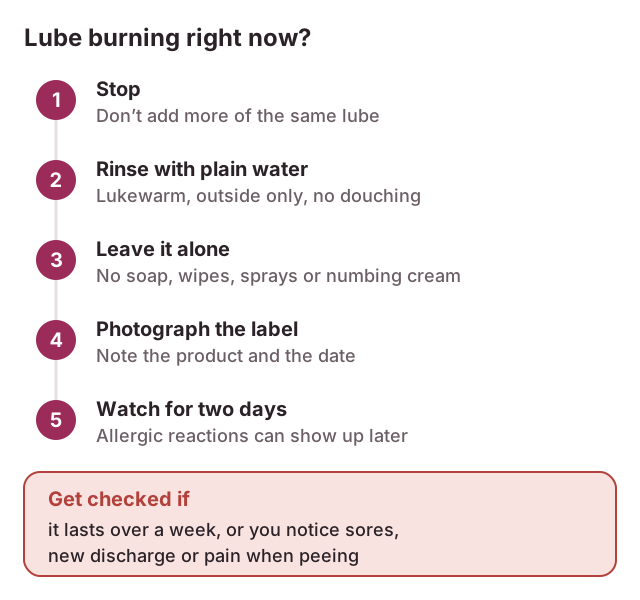
- Stop. Pushing through, or adding more of the same lube, keeps it in contact longer.
- Rinse with plenty of plain water. MedlinePlus recommends washing the area with a lot of water to remove the irritant. A lukewarm shower is the easiest way. Rinse the outside only: don’t douche, which MedlinePlus advises against.
- Skip soap, wipes and sprays. MedlinePlus suggests cleaning the genital area with water rather than soap and avoiding hygiene sprays and fragrances, and notes that sometimes the best treatment is to do nothing to the area. Don’t reach for a numbing cream, either.
- Take a photo of the ingredient list. You’ll want it later, when you pick a new lube or talk to a clinician.
- Keep an eye on it. An allergic reaction can show up a day or two later.
If you stopped mid-sex and a condom slipped or came off while you were dealing with it, our condom guide covers what to do next.
How to choose a lube that won’t burn next time
The Canadian Family Physician review recommends silicone- or water-based lube for people prone to irritation, and suggests skipping glycols, parabens, fragrance, flavors with sugars, and warming or numbing agents. It describes silicone lubes as hypoallergenic and non-irritating to genital tissue, which makes silicone a sensible first swap. Just check your toys first in our Lube Compatibility Checker, because silicone lube can damage some silicone toys.
If you prefer water-based, choose one with no glycerin or propylene glycol, and look for a brand that publishes its osmolality. The review suggests under 380 mOsm/kg, or under 1,200 if your options are limited.
Change one thing at a time. If you swap your lube, your condoms and your body wash in the same week, you won’t know which change fixed it.
How to patch-test a new lube
The American Academy of Dermatology’s method for testing skin care products works as a first screen:
- Pick a quarter-sized spot on the underside of your arm or the inside of your elbow, where it won’t get rubbed or washed off.
- Apply the amount you’d normally use, and leave it on as long as you normally would.
- Repeat twice a day for 7 to 10 days.
- If the skin turns red, itchy or swollen, wash it off and stop using the product.
Genital tissue is more delicate than the skin on your arm, so a clean result mostly reassures you about allergy, not about whether a concentrated formula will sting. We’d follow a clean arm test with a small amount on the outside of the vulva, penis or anus before using it anywhere internal.
If reactions keep happening and you can’t pin down why, a dermatologist or allergist can do formal patch testing. MedlinePlus notes it takes at least three office visits, because some reactions take days to appear.
When burning is a sign of something else
If the burning continues after you’ve rinsed, happens without any lube, or comes with other symptoms, it’s probably not (only) the lube. MedlinePlus advises contacting a clinician if you have:
- a sudden change in discharge, or itching, redness or swelling that doesn’t settle;
- blisters or sores on the genitals;
- burning when you pee or other urinary symptoms;
- symptoms that get worse or last more than a week despite home care.
Contact one right away if you also have a fever or pain in your pelvis or belly, or you may have been exposed to an STI. A gynecologist, primary care clinician or sexual health clinic can test for infection, and if you’re wondering whether your lube is behind repeat infections, read can lube cause a yeast infection?
Frequently asked questions
Why does water-based lube burn?
Concentration is the first suspect. Glycols like glycerin and propylene glycol can push a water-based lube to many times the osmolality of vaginal fluid, which can irritate delicate tissue. Fragrance, flavors and preservatives are the other common suspects.
Can lube cause a burning sensation after sex?
Yes. Irritation can linger after the lube is gone, and an allergic reaction typically shows up 24 to 48 hours after contact. If burning comes with discharge, sores or pain when you pee, get checked for an infection.
Can lube cause itching?
It can, especially formulas with fragrance, flavors or preservatives you’re sensitive to. Itching that starts a day or so after sex and keeps returning with the same product points toward an allergy. Itching with a change in discharge is more likely an infection.
Is warming lube supposed to burn?
It’s supposed to feel warm, not painful. Warming lubes often contain high levels of propylene glycol, and if the sensation becomes burning or stinging, rinse it off and choose a plain formula next time.
Sources
- WHO/UNFPA/FHI360: Use and procurement of additional lubricants for male and female condoms (advisory note, 2012)
- Canadian Family Physician (2025): Approach to lubricant use for sexual activity
- MedlinePlus: Contact dermatitis
- MedlinePlus: Vaginal itching and discharge, adult and adolescent
- American Academy of Dermatology: How to test skin care products
Spotted an error or something out of date? Email [email protected] and we’ll take a look.
More guides

Guide · Toy Safety & Care
Body-Safe Toy Materials: What to Choose and What to Avoid
Not every material is equally safe. Learn which materials are non-porous and easy to clean, and which ones to avoid.
Updated

Guide · Toy Safety & Care
How to Buy Sex Toys Discreetly: Packaging, Billing and Delivery
What discreet shipping really looks like, what shows up on your bank statement, and how to keep emails, deliveries and gifts private in a shared home.
Updated