Latex vs Non-Latex Condoms: Polyisoprene, Polyurethane, Lambskin
Polyisoprene, polyurethane, lambskin or latex? Compare STI protection, breakage data, oil compatibility, feel and allergy safety to pick the right condom.

Latex is still the default condom for most people: it’s the most common type on the shelf, and the CDC calls it the best type of condom for HIV prevention. If latex is off the table because of an allergy, polyisoprene is the stretchy swap (but it’s still not oil-safe), and polyurethane is the thin, oil-friendly option that breaks more often in studies. Lambskin is the odd one out: it helps prevent pregnancy, but it does not protect against STIs or HIV.
Here’s how the four external condom materials compare, plus the nitrile internal condom, and how to choose between them.
Latex vs non-latex condoms at a glance
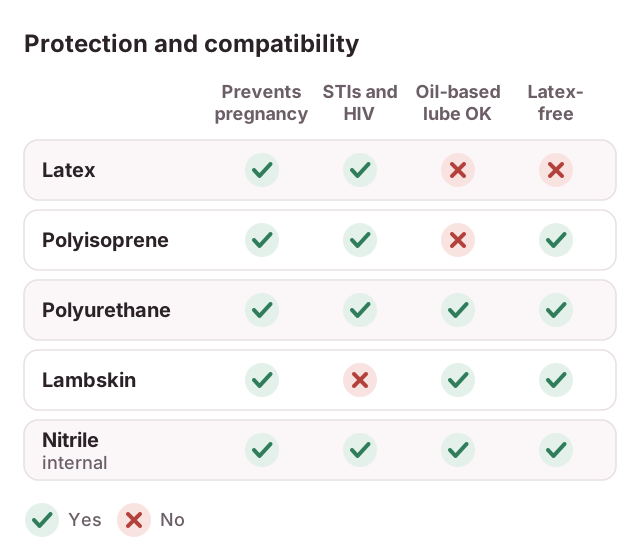
| Material | Best for | Watch out for |
|---|---|---|
| Latex | Most people; the CDC’s first choice for HIV prevention | Latex allergy; anything with oil damages it |
| Polyisoprene | Latex allergy when you want a stretchy fit | Still not safe with oil-based lube |
| Polyurethane | Latex allergy plus oil-based lube; a thin feel | Looser fit, more breakage in trials, costs a little more |
| Lambskin (natural membrane) | Pregnancy prevention only, with a latex allergy | No protection against STIs or HIV |
| Nitrile (internal) | Wearing the condom inside the vagina or anus; any lube | A different shape and fit to get used to |
Latex condoms: the benchmark
Latex condoms are made from rubber, and Planned Parenthood notes they’re the most common type of condom. Used correctly, they help protect against both pregnancy and STIs. Planned Parenthood puts condoms at around $2 each, and sometimes they cost nothing at all.
Their one big chemical weakness is oil. Planned Parenthood’s rule is simple: use only water-based or silicone lube with latex, and nothing with oil, because oil can damage it. That includes oil-based lubes, massage oil, and the jar of coconut oil people reach for as lube. If you’re not sure what’s in yours, run it through our Lube Compatibility Checker.
The other limit is allergy. According to Cleveland Clinic, a latex reaction can show up as itching, hives and swelling, and occasionally as trouble breathing or a feeling that your throat is closing. A severe reaction (anaphylaxis) is very unlikely, but it’s possible. Some people also simply dislike the taste or smell: Planned Parenthood notes that some people pick plastic condoms for oral sex so they don’t taste latex.
Polyisoprene vs latex condoms
Polyisoprene is a synthetic rubber. Cleveland Clinic explains that it doesn’t contain the proteins that cause latex allergic reactions, and that polyisoprene condoms are stretchier than latex. That makes it the most straightforward switch if you or a partner reacts to latex but you liked how latex fit.
Oil compatibility is where people get caught out. “Non-latex” on the box doesn’t mean “oil-safe.” Planned Parenthood says you can generally use oil-based lube with plastic condoms, except polyisoprene. Treat a polyisoprene condom exactly like latex: water-based or silicone lube only.
On protection, Cleveland Clinic says polyisoprene offers similar pregnancy and STI prevention to latex, and the FDA has cleared polyisoprene condoms for contraception and to help reduce the risk of STIs. The public breakage data is thinner than for latex. In the FDA clearance summary for one thin (45 micron) polyisoprene condom, a clinical study of more than 267 couples found:
- Breakage: 1.3% for the polyisoprene condom vs 0.7% for the latex comparison condom.
- Slippage: 0.6% for both.
- Total clinical failure: 1.9% vs 1.3%, which the study judged statistically non-inferior to latex.
That’s one product’s study, submitted by its maker for clearance. It’s reassuring, but it isn’t a large independent trial, and we didn’t find one.
Polyurethane condoms: thin and oil-friendly, but less forgiving
Polyurethane condoms are made of thin plastic rather than rubber. In one trial included in a Cochrane review, the polyurethane condom was 0.03 mm thick, compared with 0.06 mm for the latex condom. Researchers have suggested non-latex condoms like these may have a less noticeable odor, a less constricting fit and a better ability to conduct body heat. In that same trial, people preferred the polyurethane condom for thinness and odor, and the latex one for touch, feel and ease of unrolling.
Polyurethane works with oil-based lube, and it’s latex-free. The trade-offs:
- Fit: Cleveland Clinic says polyurethane condoms don’t fit as tightly as latex, so they’re more likely to slip off. Getting the size right matters more here: our condom size chart shows how to measure, and the size calculator turns your number into a width.
- Breakage: the CDC says plastic condoms break more often than latex. The Cochrane review found that in the comparisons with a clear difference, the odds of a non-latex condom breaking during sex were about 2.6 to 5 times higher than for its latex comparison. Most comparisons found no clear difference in slippage.
- Cost: Cleveland Clinic notes they cost a little more than latex.
Keep the age of that evidence in mind. The Cochrane review’s last literature search was in December 2012, and it mixed polyurethane with another synthetic material. Newer polyurethane designs may perform differently, and the review’s authors said the pregnancy-prevention efficacy of non-latex condoms needed more research. Their conclusion was still that non-latex condoms are an acceptable alternative for people with allergies, sensitivities or preferences that would otherwise stop them using latex consistently.
Lambskin condoms vs latex (and why HIV is the dealbreaker)
Lambskin, or natural membrane, condoms are made from the lining of animal intestines, usually sheep. They have tiny holes. Planned Parenthood explains that the holes are small enough to block sperm but big enough to let bacteria and viruses through, and the CDC says natural membrane condoms should not be used to prevent HIV or other STIs.
So lambskin can help prevent pregnancy, but it isn’t STI protection. On the plus side, it’s latex-free and works with any lube, including oils. Cleveland Clinic puts it plainly: use them only if the risk of STIs isn’t a concern. In practice, that means partners who have both been tested and who only need pregnancy prevention.
Nitrile internal condoms
Nitrile shows up mainly in internal condoms (sometimes called female condoms). According to the CDC, these are thin nitrile pouches worn in the vagina or anus, HIV can’t travel through the nitrile barrier, and it’s safe to use any lubricant with them. That makes an internal condom another oil-friendly, latex-free option, and one the receiving partner puts in. Our condom guide covers how they work and why you shouldn’t double up with an external condom.
Which condom material should I pick?
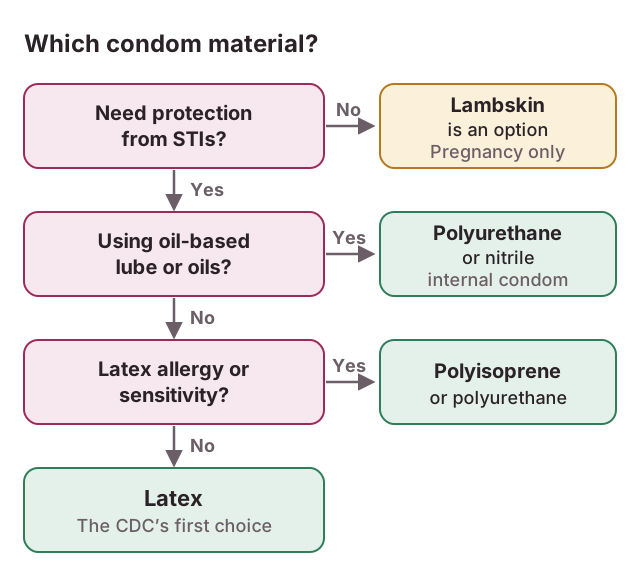
In plain terms:
- Need protection from STIs? Rule out lambskin. If you don’t (both partners tested, pregnancy prevention only), lambskin is an option, along with everything else on this list.
- Using oil-based lube or another oily product? Choose polyurethane or a nitrile internal condom. Or switch to a water-based or silicone lube and keep your options open.
- Latex allergy or sensitivity in either partner? Choose polyisoprene if you want stretch, or polyurethane if you also need oil compatibility.
- None of the above? Choose latex, the CDC’s first choice for HIV prevention.
Non-latex condoms for sensitive skin
Itching or burning after sex with a latex condom doesn’t automatically mean a latex allergy. The condom, its pre-applied lube and any lube you add all touch your skin, so any of them could be the cause. Change one thing at a time: try a non-latex condom with the lube you already use, and if the irritation continues, look at the lube itself. Our guide to lube ingredients covers the usual suspects.
If you think you might be allergic to latex, see your doctor or an allergist. Cleveland Clinic notes that a skin or blood test can confirm it. Trouble breathing or a feeling that your throat is closing after contact with latex needs emergency care, not a wait-and-see approach.
Frequently asked questions
Do lambskin condoms protect against HIV?
No. Lambskin condoms have tiny holes that can let viruses through, and the CDC says natural membrane condoms should not be used to prevent HIV or other STIs. They can help prevent pregnancy, but for HIV protection choose latex, polyisoprene or polyurethane.
Are polyisoprene condoms as safe as latex?
For people with a latex allergy, they’re a good substitute. The FDA clears them to help prevent pregnancy and reduce STI risk, and in one product’s clearance study their breakage and slippage rates were judged non-inferior to latex. Independent long-term data is limited, so latex still has the longer track record.
Can you use coconut oil with non-latex condoms?
It depends on the material. Polyurethane, nitrile and lambskin tolerate oil, but polyisoprene doesn’t, so coconut oil is a no with polyisoprene, just as with latex. Our guide to coconut oil as lube covers the other reasons to think twice.
Are non-latex condoms more likely to break?
Polyurethane ones, on the evidence we have. The CDC says plastic condoms break more often than latex, and a Cochrane review found higher breakage for several non-latex designs. For polyisoprene, the published clearance data for one condom showed breakage close to latex. Whatever the material, check the date too: how to read a condom expiration date.
Sources
Spotted an error or something out of date? Email [email protected] and we’ll take a look.
More guides

Guide · Toy Safety & Care
Body-Safe Toy Materials: What to Choose and What to Avoid
Not every material is equally safe. Learn which materials are non-porous and easy to clean, and which ones to avoid.
Updated

Guide · Toy Safety & Care
How to Buy Sex Toys Discreetly: Packaging, Billing and Delivery
What discreet shipping really looks like, what shows up on your bank statement, and how to keep emails, deliveries and gifts private in a shared home.
Updated