Body-Safe Toy Materials: What to Choose and What to Avoid
Not every material is equally safe. Learn which materials are non-porous and easy to clean, and which ones to avoid.

The material a product is made from affects how safe it is and how well you can clean it. This guide explains the difference between porous and non-porous materials and what to look for on the label.
Why material matters
Porous materials have tiny holes that can trap moisture and bacteria, even after washing. Non-porous materials have a smooth, sealed surface that can be cleaned thoroughly. Some cheaper plastics may also contain phthalates, chemicals used to soften PVC that many people prefer to avoid.
Non-porous materials
These are generally considered body-safe when made to a good standard:
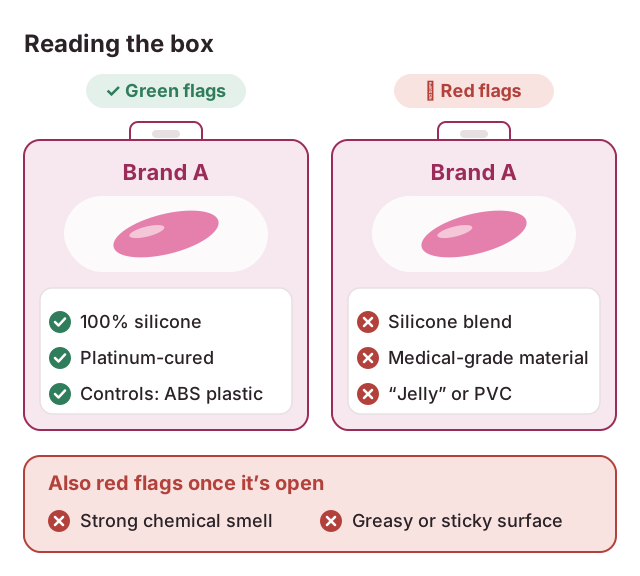
- 100% silicone: soft, flexible and durable. Look for brands that state “100% silicone” or “platinum-cured silicone”, not a “silicone blend”.
- Borosilicate glass: the same heat-resistant glass used in lab equipment. Smooth and easy to clean.
- Stainless steel: durable, heavy and easy to clean.
- ABS plastic: a hard, non-porous plastic often used for product bodies and controls.
Materials to be cautious about
- TPE and TPR (often marketed as “jelly”, “cyberskin” or “realistic feel”): porous, harder to clean fully, and best used with a condom.
- PVC and jelly rubber: may contain phthalates and often have a strong chemical smell.
Wondering how TPE really compares? Read TPE vs silicone: is TPE body-safe?
Choosing a lubricant that matches
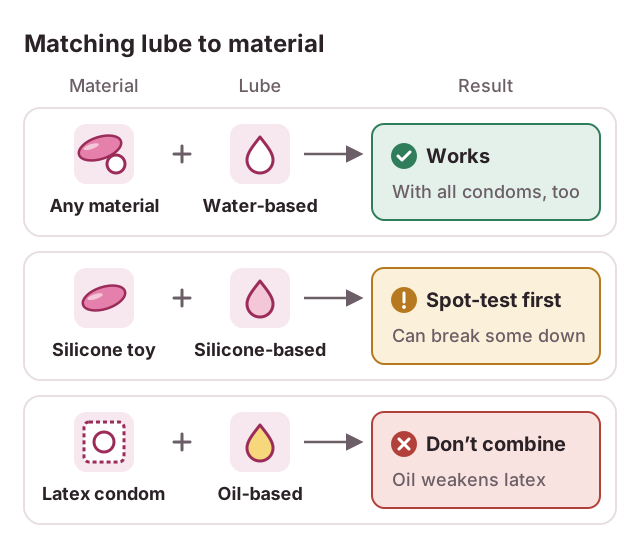
- Water-based lube works with every material and with all condoms.
- Silicone-based lube can break down some silicone products. Check the manufacturer’s guidance or do a spot test first.
- Oil-based lube can weaken latex condoms, so don’t combine the two.
Not sure what works with what? Try our Lube Compatibility Checker or read the full guide to choosing lube.
Cleaning and storage
Always follow the manufacturer’s instructions first. As a general rule:
- Wash with warm water and mild, unscented soap after every use.
- Let it dry completely before storing.
- Store items separately in a clean pouch so materials don’t react with each other.
Our cleaning and storage guide covers each material in detail.
When to see a healthcare provider
Stop using a product and talk to a healthcare provider if you notice pain, burning, unusual discharge, a rash or any other reaction after use.
Sources
Spotted an error or something out of date? Email [email protected] and we’ll take a look.
More guides

Guide · Toy Safety & Care
How to Buy Sex Toys Discreetly: Packaging, Billing and Delivery
What discreet shipping really looks like, what shows up on your bank statement, and how to keep emails, deliveries and gifts private in a shared home.
Updated

Guide · Lube & Condoms
Can Lube Cause a Yeast Infection, UTI or BV? What Research Shows
Lube rarely causes infections on its own, but oils, spermicide and some ingredients are linked to BV, yeast and UTIs. Here’s the evidence and what to use.
Updated