Sex and Menopause: Dryness, Comfort and What Actually Helps
Why menopause can make sex uncomfortable, and what helps: lubricants, vaginal moisturizers and treatments to ask your doctor about.
Menopause brings changes that can affect sex and intimacy. Dryness, discomfort and changes in desire are very common, but they’re not something you just have to put up with. There are simple, effective options, and your doctor can help with the rest.
Why menopause can affect comfort
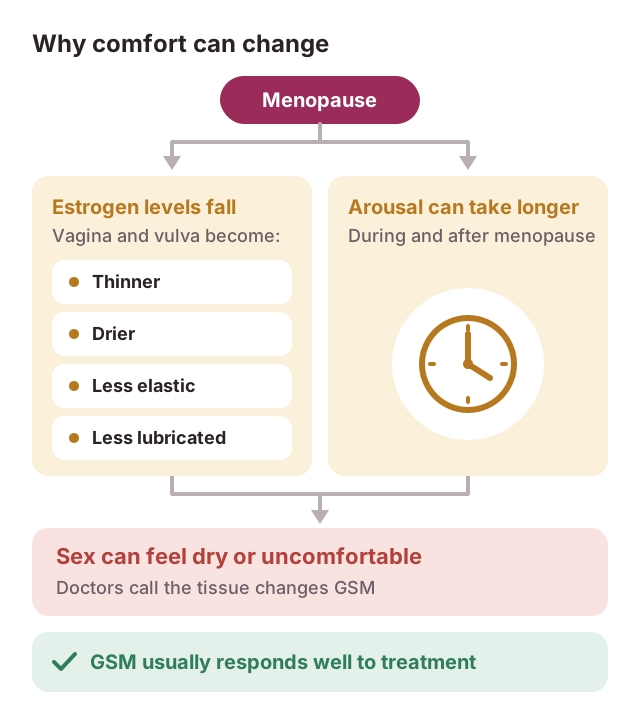
As estrogen levels fall, the tissues of the vagina and vulva can become thinner, drier and less elastic, and natural lubrication decreases. Doctors call this genitourinary syndrome of menopause (GSM). You may also hear it called vaginal atrophy. It can cause:
- vaginal dryness, itching or burning
- pain or discomfort during sex
- light bleeding after sex
- needing to pee more often, or more frequent urinary tract infections
These changes can start during perimenopause. Unlike hot flashes, they often don’t get better on their own, but they do usually respond well to treatment.
Other parts of menopause, such as poor sleep, mood changes, tiredness and shifts in desire, can affect intimacy too. All of this is normal and worth talking about.
What can help
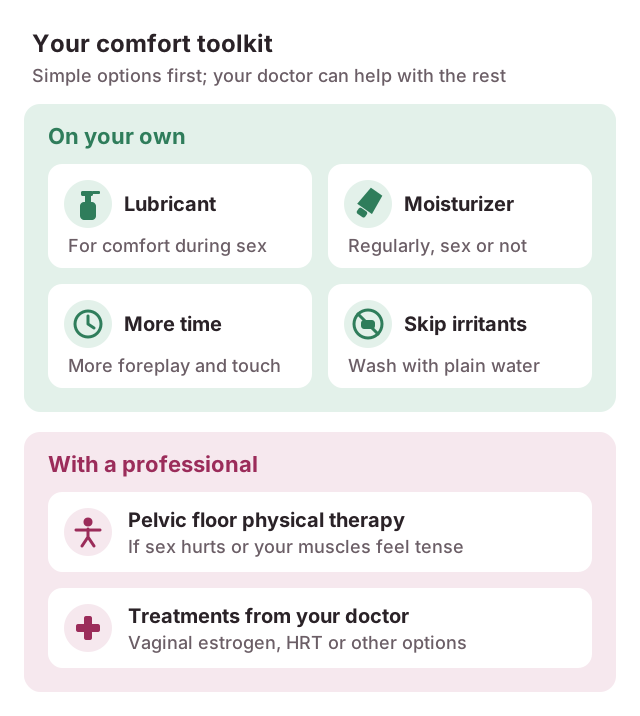
Here’s the whole toolkit at a glance, with the details below.
Lubricants during sex
A good lubricant can make sex much more comfortable. Silicone-based lube lasts longer, while water-based lube works with every toy and condom. If you have sensitive skin, avoid lubes with fragrance, warming ingredients or a lot of glycerin. Our guide to choosing lube explains the options.
Vaginal moisturizers for everyday comfort
Moisturizers are different from lubricants. You use them regularly, often every few days, whether or not you’re having sex. They help the vaginal tissues hold on to moisture and can ease everyday dryness and itching. Not sure which you need? See vaginal moisturizer vs lube, or our ingredient comparison of Replens and Revaree.
Treatments to ask your doctor about
- Vaginal estrogen: low-dose estrogen in the form of a cream, tablet, vaginal insert or ring, applied directly to the vagina. It treats the underlying tissue changes, and very little is absorbed into the rest of the body. Your doctor can tell you whether it’s suitable for you.
- Hormone replacement therapy (HRT): can also improve vaginal symptoms, along with other symptoms of menopause.
- Other prescription options: there are non-estrogen treatments too, so it’s worth asking.
Give yourself more time
Arousal often takes longer during and after menopause. Spending more time on foreplay and touch increases blood flow and natural lubrication, and takes the pressure off.
Pelvic floor physical therapy
If sex is painful or your muscles feel tense, a pelvic floor physical therapist can help. They may suggest exercises, relaxation techniques or vaginal dilators. Our guide to pelvic floor exercises after 50 is a good place to start, and if sex still hurts even with lube, read what else helps with painful sex after menopause.
Avoid common irritants
Scented soaps, bubble baths, douches and scented wipes can make dryness and irritation worse. Wash the vulva with plain water or a gentle, fragrance-free cleanser.
Talking with your partner
Let your partner know what’s changing for you and what helps. You might explore other kinds of touch and intimacy, or positions that let you control the depth and pace. Our guide to talking with your partner about trying new things has tips for starting the conversation.
When to see a doctor
Also see a doctor if you have:
- pain during sex that doesn’t improve with lubricant
- burning, itching or unusual discharge
- urinary symptoms, such as needing to pee often or pain when you pee
- symptoms that are affecting your quality of life or your relationship
Sources
Spotted an error or something out of date? Email [email protected] and we’ll take a look.
More guides

Guide · Toy Safety & Care
Body-Safe Toy Materials: What to Choose and What to Avoid
Not every material is equally safe. Learn which materials are non-porous and easy to clean, and which ones to avoid.
Updated

Guide · Toy Safety & Care
How to Buy Sex Toys Discreetly: Packaging, Billing and Delivery
What discreet shipping really looks like, what shows up on your bank statement, and how to keep emails, deliveries and gifts private in a shared home.
Updated