Kegel Exercises for Women Over 50: Bladder Leaks and Menopause
How menopause and aging affect the pelvic floor, stress vs. urge leaks, a simple weekly Kegel routine, and when to see a pelvic floor physical therapist.

Kegels still work after 50. Pelvic floor exercises are among the first things clinicians suggest for bladder leaks at any age, and the NHS recommends at least 8 squeezes, at least three times a day, for at least three months. What changes after menopause is the backdrop: lower estrogen affects the bladder and urethra, so it helps to know which kind of leak you have and which treatments to ask about alongside the exercises.
Leaks are common, not inevitable. The National Institute on Aging says incontinence is more common in older people, especially women, and that it “can often be stopped or controlled.”
How do menopause and aging affect the pelvic floor?
Estrogen helps keep the bladder and urethra healthy, according to The Menopause Society. As levels fall, you may notice:
- needing to pee more often or more urgently
- burning or pain when you pee
- more urinary tract infections
- waking two or more times a night to pee
- leaks, with or without that sense of urgency
These urinary changes are part of the genitourinary syndrome of menopause (GSM), which also includes vaginal dryness and pain with penetration. Unlike hot flashes, GSM often gets worse over time without treatment. Our guide to sex and menopause covers the vaginal side, and if sex hurts even with lube, see painful sex after menopause.
Other things pile on with age. The NIA lists weak bladder or pelvic floor muscles, an overactive bladder, pelvic organ prolapse (when the bladder, uterus or rectum shifts down into the vagina), constipation, infections and some medications among the causes of leaks. Stress incontinence, it notes, sometimes starts around menopause.
Stress or urge? Know which leak you have
The type of leak shapes what helps, so it’s worth pinning down.
| Type | What it feels like | What helps first |
|---|---|---|
| Stress | Leaks when you cough, sneeze, laugh, lift or exercise | Pelvic floor exercises; squeezing before you lift; a pessary fitted by your gynecologist |
| Urge | A sudden, strong need to pee that’s hard to hold, sometimes leaking on the way | Pelvic floor exercises, bladder training, cutting back on caffeine; medication if needed |
| Mixed | A bit of both | A combination, usually starting with exercises and bladder training |
ACOG says Kegels help with all types of incontinence. For urge symptoms, bladder training aims to stretch the time between bathroom trips back toward every 3 to 4 hours during the day, and ACOG says leaks may ease after a few weeks.
A bladder diary makes all of this easier. For a few days, note when you pee, when you leak, what you were doing and what you drank. ACOG says your ob-gyn may ask for one anyway, and it gives them far more to go on than memory.
A sensible pelvic floor routine after 50
If you’ve never done a Kegel, start with our beginner’s guide to find the right muscles. Then build a daily habit with two kinds of squeeze, as the NHS recommends:
- Long squeezes. Squeeze and lift, hold, then relax fully. Start with whatever hold you can manage and work toward 10 seconds.
- Quick squeezes. Squeeze quickly, hold for about 2 seconds, relax. Repeat 10 times.
Do at least 8 squeezes in a session, at least three sessions a day, every day, for at least three months. Breathe normally throughout and try not to pull your belly in. If it’s helping after three months, keep going.
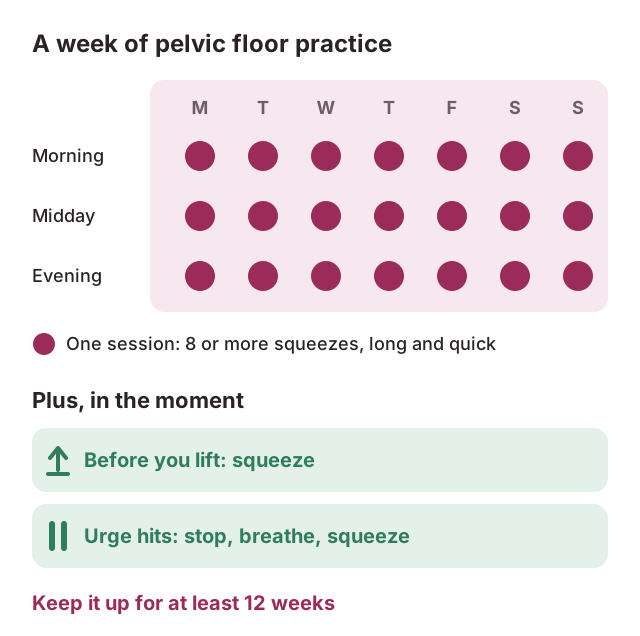
Two in-the-moment habits make the routine pay off:
- Squeeze before you lift. The NHS suggests tightening your pelvic floor before and during any lift, from grocery bags to a suitcase.
- When an urge hits, don’t run. The NIA’s urgency suppression technique: hold still, take slow, relaxing breaths and squeeze your pelvic floor until the urge eases, then head to the bathroom at a normal pace.
A few changes back the exercises up. The NHS suggests cutting down on caffeine (coffee has the biggest effect), cutting down on alcohol, and still drinking 6 to 8 glasses of fluid a day unless your doctor says otherwise, because drinking too little can make leaks worse. It also suggests swapping high-impact exercise such as jogging for strengthening work such as Pilates if leaks are a problem.
Should you add weights? Some people like the resistance once the basic squeeze is solid. Read our guide to Kegel balls and weights first, and check with a clinician if you have prolapse symptoms or pelvic pain.
When to see a pelvic floor physical therapist
You don’t have to struggle alone with a routine you’re not sure about. ACOG notes your ob-gyn may refer you to a physical therapist who specializes in pelvic health, and that biofeedback, using sensors that measure your squeeze, can help you find the right muscles. The NHS describes a specialist first checking whether you can squeeze your pelvic floor, and how strongly, then building an exercise plan from that. If you can’t make the muscles contract at all, electrical stimulation may be an option.
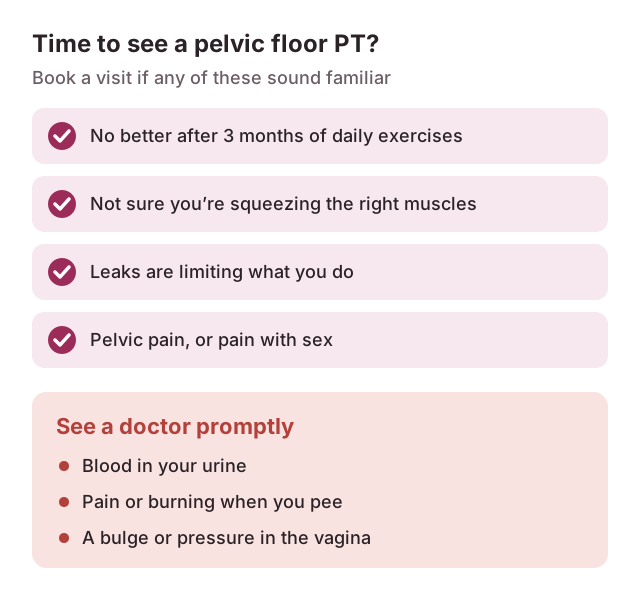
Book an appointment if:
- you’ve done the exercises daily for three months without improvement
- you can’t tell if you’re squeezing the right muscles
- leaks are stopping you from exercising, traveling or socializing
- you have pelvic pain or pain with sex
See a doctor promptly for blood in your urine, cloudy urine, pain or burning when you pee, or a feeling of pressure or a bulge in your vagina, which can be a sign of prolapse. The NIA also flags peeing eight or more times a day, or passing only small amounts after strong urges, as reasons to get checked.
You may be able to pay for pelvic floor therapy with an HSA or FSA; see our guide to HSA and FSA eligibility for pelvic floor care.
What to ask your doctor about
Exercises are the foundation, not the whole toolkit. Questions worth bringing to your gynecologist or primary care doctor:
- Vaginal estrogen. The NIA says low-dose vaginal estrogen cream may help relieve urge or stress incontinence, and ACOG says estrogen inserted into the vagina may help with urinary incontinence. Ask whether it suits your health history.
- A pessary. ACOG describes these as devices your ob-gyn fits to support the vaginal walls and lift the bladder and urethra, and says you can usually insert and remove one yourself. There’s also an over-the-counter tampon-like device for leaks.
- Medication for urge leaks. Several options exist, including an over-the-counter oxybutynin patch. The NIA notes that some overactive bladder drugs have been linked to a higher risk of cognitive decline in adults over 65, so ask which ones make sense for you.
- Your current medications and any infections. The NIA lists urinary tract infections, constipation and some medicines among the causes of leaks, and medication-related bladder problems can be short-lived.
- A prolapse check, if you feel heaviness or a bulge.
Bring your bladder diary. It turns “I leak sometimes” into something your doctor can act on.
Frequently asked questions
Is it too late to start Kegel exercises after menopause?
No. Pelvic floor exercises are a standard first treatment for leaks in older women, and the NIA says incontinence can often be stopped or controlled. Starting now means at least three months of daily practice before you judge the results.
How long do pelvic floor exercises take to work after 50?
The NHS says a program should last at least three months, and you may need a few months before you notice a difference. If you’ve been consistent for three months and nothing has changed, see a pelvic floor physical therapist.
Can Kegels help with bladder leaks after 50 if I have urge incontinence?
Yes. ACOG says Kegels help with all types of incontinence, including urge. Combine them with bladder training and the stop-breathe-squeeze technique when an urge hits, and ask your doctor about other treatments if leaks continue.
Does vaginal estrogen help with bladder leaks?
It may. The NIA says low-dose vaginal estrogen cream may help relieve urge or stress incontinence, and ACOG lists vaginal estrogen among the treatments for urinary incontinence. It’s a prescription, so ask your doctor whether it’s right for you.
What is the best pelvic floor exercise for menopause?
There isn’t one magic move. The NHS recommends a mix of long squeezes and quick squeezes, done several times a day for at least three months. Consistency matters more than intensity.
Sources
Spotted an error or something out of date? Email [email protected] and we’ll take a look.
More guides

Guide · Toy Safety & Care
Body-Safe Toy Materials: What to Choose and What to Avoid
Not every material is equally safe. Learn which materials are non-porous and easy to clean, and which ones to avoid.
Updated

Guide · Toy Safety & Care
How to Buy Sex Toys Discreetly: Packaging, Billing and Delivery
What discreet shipping really looks like, what shows up on your bank statement, and how to keep emails, deliveries and gifts private in a shared home.
Updated