Is Lube Safe During Pregnancy? What to Use and When to Pause
Lube is generally fine in an uncomplicated pregnancy. How to pick a gentle one, why sex can feel different, when to hold off, and lube after birth.
Yes, lube is generally safe during pregnancy. If your pregnancy is uncomplicated, ACOG says you can keep having sex throughout unless your ob-gyn has told you otherwise, and Cleveland Clinic specifically suggests lube if pregnancy hormones leave you dry. The main thing is to choose a gentle one: plain, water-based and unscented, and not oil-based.
The bigger questions tend to be about everything around the lube: why sex suddenly feels different, which situations call for a pause, and what changes after the baby arrives.
Is it safe to use lube while pregnant?
For most people, yes. Neither ACOG nor Cleveland Clinic treats lube as a risk to the pregnancy, and Cleveland Clinic lists it as a fix for pregnancy-related dryness. The one caveat is yeast, which we get to below. You won’t find much research on individual lube ingredients in pregnancy, so a plain formula is the sensible default.
You also don’t need a special “pregnancy lube.” If you used a fertility-friendly lube while you were trying, it’s still an FDA-cleared personal lubricant, so you can keep using it; its sperm-friendly testing just doesn’t matter anymore. Choose on comfort and gentleness instead.
Why sex can feel different during pregnancy
Pregnancy changes the tissue lube is going on. According to ACOG, levels of estrogen and progesterone rise, and more blood flows to the vaginal area. The vulva may swell and darken, and you may notice more discharge than usual. Cleveland Clinic adds that the extra blood flow can make the vulva especially sensitive, and that hormones can make these areas tender enough to be uncomfortable.
Dryness can happen too. That can seem odd alongside the extra discharge, but Cleveland Clinic notes that pregnancy hormones sometimes cause vaginal dryness, and that lube can help. Light spotting after penetrative sex is often normal, because of the increased blood flow to the cervix and vagina. Heavy bleeding is not, and needs a call to your provider.
One more change matters for lube choice. ACOG says pregnancy hormones can shift the balance of yeast and bacteria in the vagina, and vaginal infections are more common during pregnancy. ACOG also lists lubricants, along with pregnancy itself, among things that can lead to a yeast overgrowth. That isn’t a reason to go without lube if you need it, but it is a reason to keep the formula simple and to tell your provider about new itching or burning of the vulva, the most common yeast symptoms.
How to choose a gentle lube when you’re pregnant
Here’s the checklist we’d use in the store:
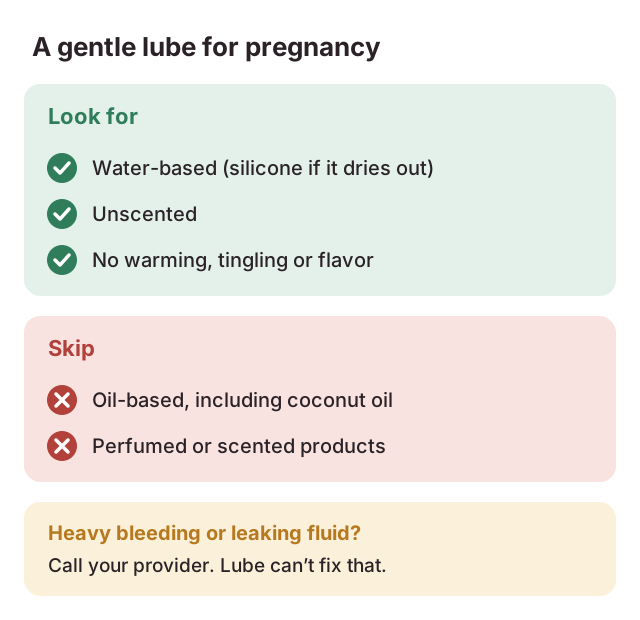
- Water-based first. An ob-gyn writing for ACOG says she prefers water-based lubes for dryness, and ACOG’s postpartum advice also points to water-based lube. Silicone lube lasts longer, so it’s an option if water-based keeps drying out.
- Skip oil-based lubes. That same ACOG expert advice says they can cause irritation and make condoms less effective.
- Unscented and plain. ACOG advises against perfumed products on the inner vulva. We’d apply the same logic to flavored, warming and tingling lubes; our guide to why lube burns explains how those ingredients can sting.
- Read the full ingredient list if you’re prone to irritation or yeast. Our lube ingredients guide explains glycerin, preservatives, pH and osmolality, and our guide to whether lube can cause a yeast infection covers that question.
- Stick with what works. If a lube you used before pregnancy still feels good, there’s no rule that says you have to switch.
If you use condoms during pregnancy, for example with a new partner or while either of you is being treated for an STI, the lube has to match the condom. Our Lube Compatibility Checker does that in a few taps.
Can you use coconut oil as lube when pregnant?
We wouldn’t use it inside the vagina while pregnant. There’s no pregnancy-specific research on coconut oil as lube, but ACOG’s expert advice is to skip oil-based lubes because they can irritate and weaken condom protection, and pregnancy already makes vaginal infections more common. On the outside, for a belly or back massage, it’s a different story. Our full guide to coconut oil and other kitchen swaps covers the evidence.
When your clinician may tell you to avoid sex
This is advice for specific situations, not a blanket pregnancy rule. Cleveland Clinic lists the ones where a provider might ask you to hold off:
- Unexplained or heavy vaginal bleeding. Light spotting after sex is often normal; heavy bleeding needs a visit.
- Leaking fluid, which can mean your water broke too early; sex could then raise the risk of infection.
- Cervical changes such as early dilation, when the cervix opens too soon.
- A history of preterm labor. If you’ve given birth before 37 weeks, your provider may ask you to avoid intercourse.
- Placenta previa, where the placenta covers the cervix and vaginal sex can disrupt it and cause bleeding.
- An STI. Avoid unprotected sex until you’ve been treated and retested.
If any of these apply, ask your provider exactly what is and isn’t OK for you rather than guessing.
Sex and lube after birth
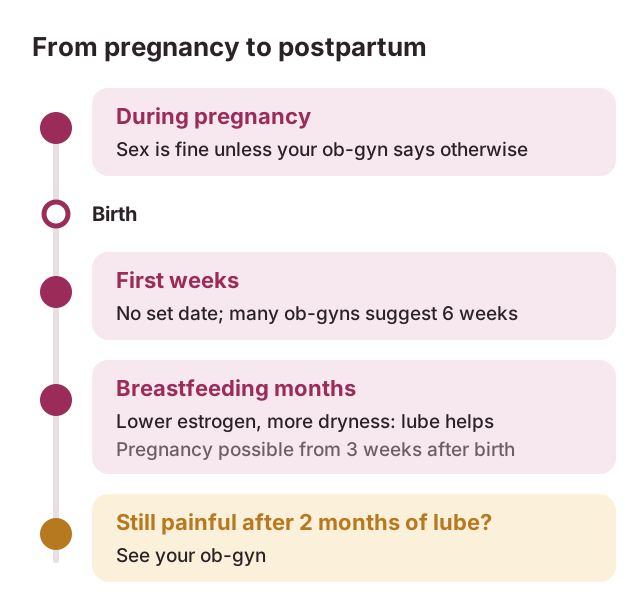
There’s no universal date to start again. ACOG says there’s no set time, and that many ob-gyns recommend waiting until 6 weeks after childbirth. The NHS likewise says there are no rules, and suggests not rushing it. Your postpartum checkup is a natural point to ask whether you’ve healed, especially if you had stitches or a cesarean birth.
When you do start again, lube becomes especially useful. ACOG names vaginal dryness as a problem after childbirth, especially if you’re breastfeeding, because estrogen levels can fall. Lubricants help, and ACOG notes that local estrogen therapy is an option too, so ask your clinician if lube alone isn’t enough. The NHS suggests using a personal lubricant to begin with, and says that if penetration hurts, you should say so and try other kinds of touch first. Our guide to vaginal moisturizers vs lube explains how the two work together if dryness lasts beyond sex.
Two things people tend not to expect:
- Fertility can return fast. The NHS says you can get pregnant from 3 weeks after giving birth, even if you’re breastfeeding and your periods haven’t come back. Sort out contraception before you need it.
- Low desire is normal. ACOG says it’s normal for new parents to have little interest in sex even several months after birth.
See your ob-gyn if irritation and pain during sex haven’t improved after about 2 months of using a moisturizer and lube, which is the timeline ACOG’s expert advice gives. The NHS also suggests raising pain at your postnatal check.
For a refresher on lube types and condom compatibility in general, see our guide to choosing lube.
Frequently asked questions
Is lube safe for pregnant women?
Yes, in an uncomplicated pregnancy. ACOG says you can have sex throughout pregnancy unless your ob-gyn has said otherwise, and Cleveland Clinic recommends lube for pregnancy-related dryness. Choose a plain, unscented, water-based lube and skip oils.
Is lube safe for pregnancy if I have a complication?
It depends on the complication, and the question is usually about sex rather than lube. Conditions such as placenta previa, a history of preterm labor or unexplained bleeding may mean your provider asks you to avoid sex, so check with them first.
Can you use coconut oil as lube when pregnant?
We’d keep it to external massage. ACOG’s expert advice is to skip oil-based lubes because they can cause irritation and make condoms less effective, and vaginal infections are already more common in pregnancy.
Is it safe to use lube while breastfeeding?
Yes, and it often helps. ACOG names vaginal dryness as a problem after birth, especially while breastfeeding, and says lubricants can help. If lube isn’t enough, ask your clinician about local estrogen therapy.
Sources
Spotted an error or something out of date? Email [email protected] and we’ll take a look.
More guides

Guide · Toy Safety & Care
Body-Safe Toy Materials: What to Choose and What to Avoid
Not every material is equally safe. Learn which materials are non-porous and easy to clean, and which ones to avoid.
Updated

Guide · Toy Safety & Care
How to Buy Sex Toys Discreetly: Packaging, Billing and Delivery
What discreet shipping really looks like, what shows up on your bank statement, and how to keep emails, deliveries and gifts private in a shared home.
Updated